Medieval & Renaissance · est. MMXXV

The Basilisk

Medieval music re-heard through a living, poetic lens — historically informed performance meets a spirit of experimentation, interlacing music, history and storytelling.

I

The Ensemble

To marry rigorous historical awareness with creative, narrative-driven programming — crafting concerts that interlace music, history, and storytelling.

Formed at the Schola Cantorum Basiliensis, Ensemble Basilisk unites musicians drawn to medieval music and its contemporary resonance. Their work pairs historically informed performance with a spirit of experimentation, exploring instruments such as the bray harp, clavicymbalum, organetto, recorder, bowed vielle and voice.

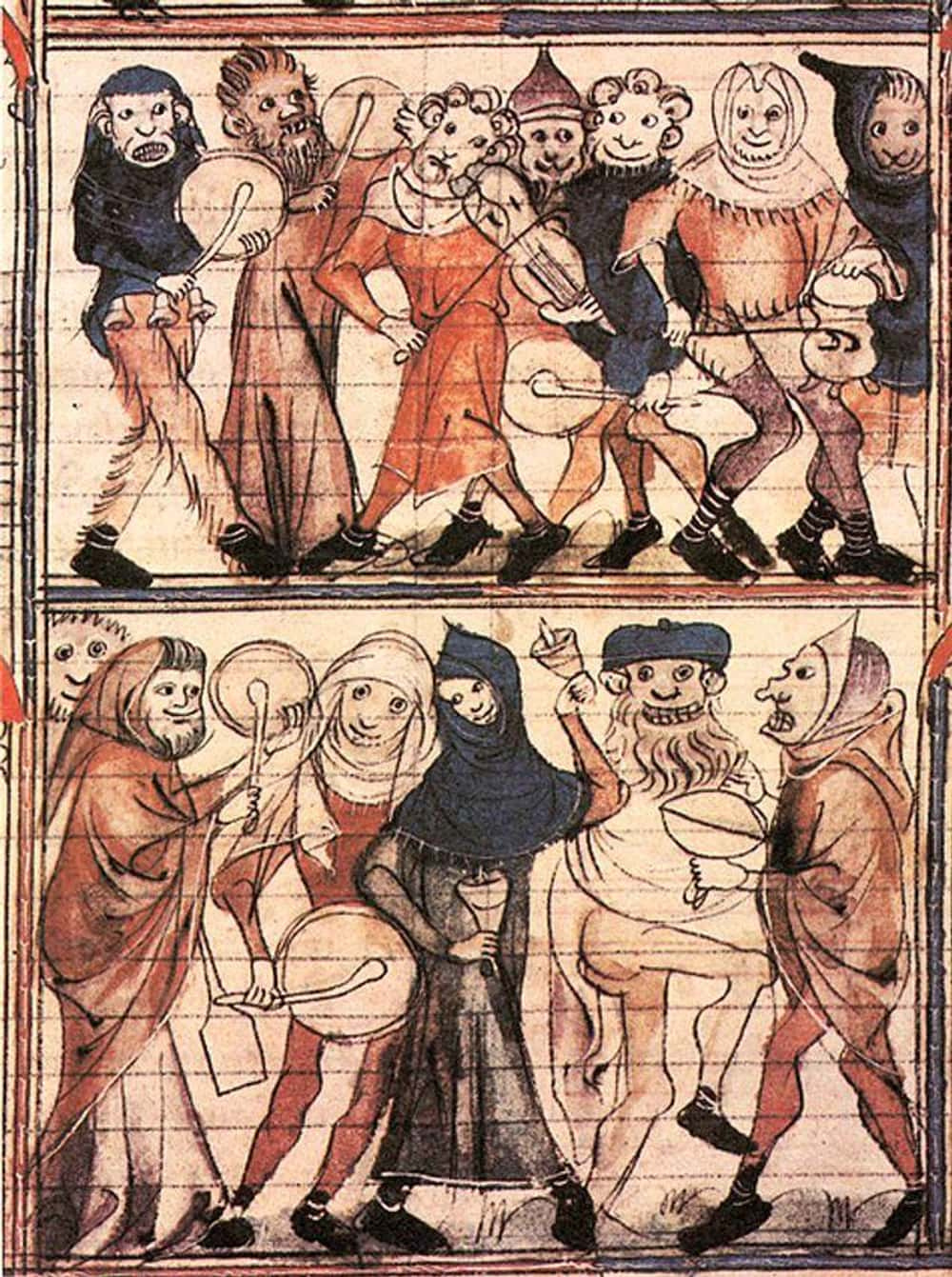
Their namesake, the mythical Basilisk, captures this duality — a symbol of transformation rooted in the Mundus Inversus, where the sacred meets the grotesque and beauty emerges from contrast. Each project re-hears the past through a living, poetic lens, reimagining early music as a space of curiosity, vitality and presence.

Basel
Schola Cantorum roots
2025
Debut · Musica Divina, PL
II

The Musicians

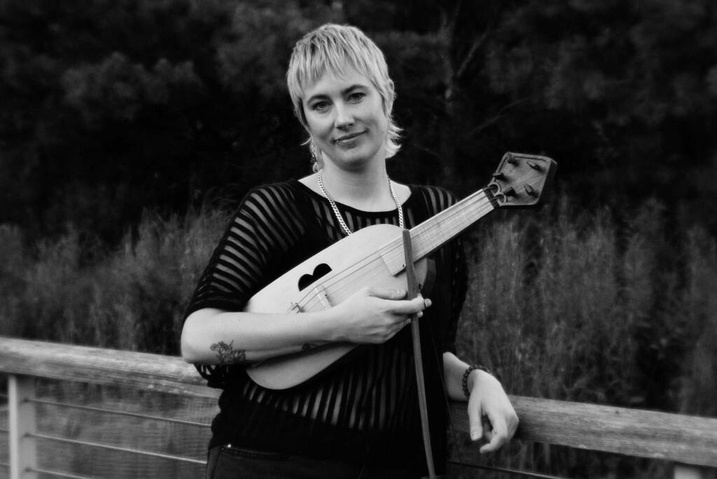
Ula Kinder with vielle
i.

Ula Kinder

Vielle & viola d'arco

Ula Kinder is a vielle and viola d'arco player who performs as a soloist and with many prominent groups across the US and Europe. They have toured widely, played live for WQXR and BBC Radio 3, and appeared at festivals including Boston Early Music Festival, Bachfest Leipzig and Lucerne Festival; in 2018 they performed on Broadway at the Belasco Theater in the award-winning Globe Theatre production of ‘Farinelli and the King’. A graduate of the Juilliard School and the Royal Academy of Music, where they studied with Nicolette Moonen and Rachel Podger, they have worked with Masaaki Suzuki, William Christie, Laurence Cummings and Ton Koopman, and now continue their studies with Baptiste Romain at the Schola Cantorum Basiliensis.
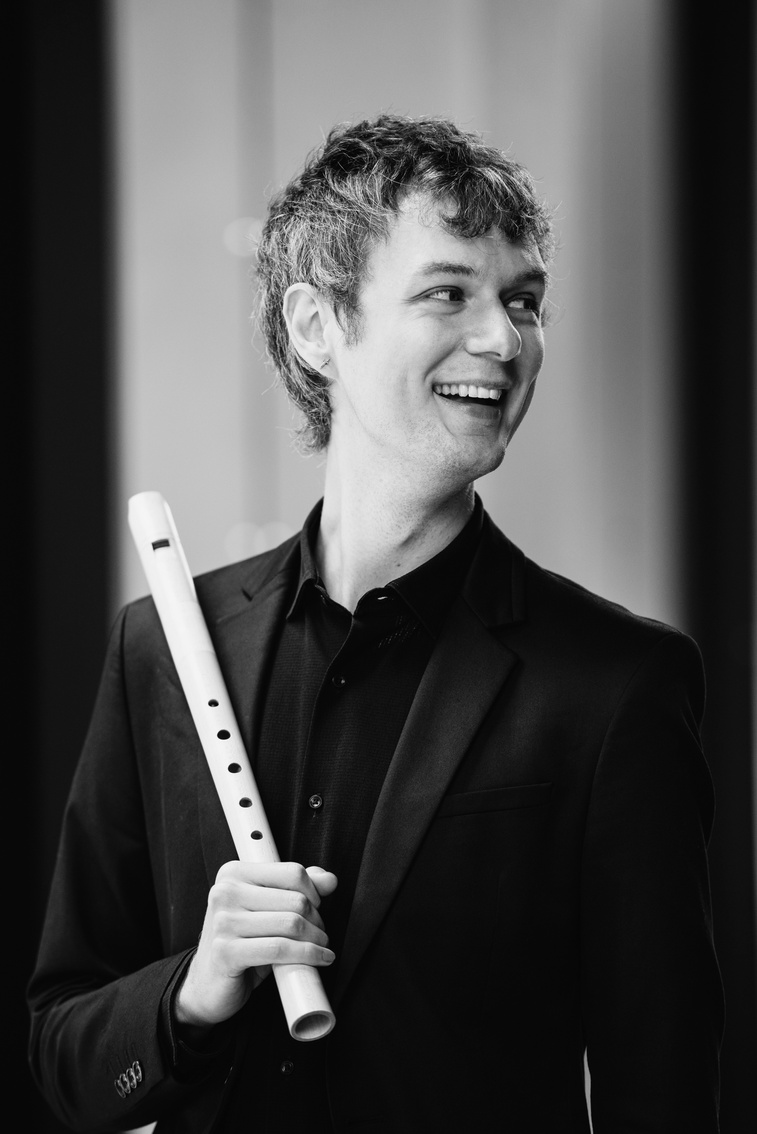
Daniel Scott with recorder
ii.

Daniel Scott

Organetto, Clavicymbalum & Recorder

Daniel Scott is a recorder and early-keyboard player specialising in medieval, renaissance and contemporary music, currently reading a master’s in medieval and renaissance keyboards at the Schola Cantorum Basiliensis. He completed his recorder master’s at the Conservatorium van Amsterdam in 2021 and won First Prize in the Wind, Brass and Percussion section of the Royal Overseas League Competition in 2022. Founding member and artistic lead of the UK medieval ensemble Rune — artists in residence at St Bartholomew the Great, London, in 2026 — he is also a member of The Royal Wind Music, with whom he has recorded two CDs, and a regular guest with Luther’s Bach Ensemble, Seldom Sene and Block4. His interest in queer medieval studies shaped the programme ‘Polyphonic Perversities: Queer Music from 12th-Century Notre Dame’, presented at Maastricht University in 2024.
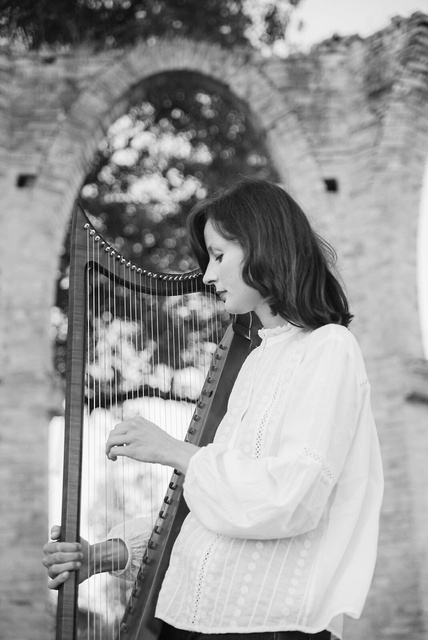
Michela Amici with harp
iii.

Michela Amici

Bray & Medieval Harp

Michela Amici studied modern and historical harps at the Conservatory G. Rossini of Pesaro and the Royal Conservatoire of The Hague, with teachers including Ernestine Stoop and Christina Pluhar, and is now undertaking a Specialized Master in Historical Harps at the Schola Cantorum Basiliensis in the class of Flora Papadopoulos. As a soloist and with her ensembles she has appeared at international festivals such as the Dutch Harp Festival, World Harp Congress, Grachtenfestival, November Music, Ravenna Festival and Musica Antica Den Haag, and was an artist in residence at Gaudeamus and the Grachtenfestival in 2022. As a basso continuo player she has performed under Richard Egarr, Alessandro Quarta, Adrián Rodríguez van der Spoel, Tineke Steenbrink and Leonard Evers, among others.
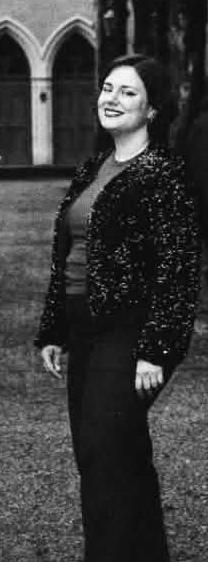
Ivana Sofia Ivanović, voice
iv.

Ivana Sofia Ivanović

Voice & Organetto

Ivana Sofia Ivanović, mezzo-soprano, began her vocal training in the Choeur des Jeunes at the Conservatoire de Bordeaux, taking part in numerous productions at the Opéra de Bordeaux. After studying harpsichord and earning a diploma in choral conducting at the Conservatoire of Rueil-Malmaison, she completed master’s degrees in Musicology and in French Literature at the Sorbonne and the University of Bordeaux. Specialising in Renaissance singing with Véronique Bourin in Tours, she went on to a Master in Medieval and Renaissance vocal performance at the Schola Cantorum Basiliensis under Katarina Livljanić, with medieval keyboards as a second study with Corina Marti, where she now continues in vocal pedagogy. Based in Basel, she founded the professional vocal ensemble KIMA, conducts several choirs in Switzerland, and performs as a soloist with Le Miroir de Musique, Sollazzo, Peregrina and La Morra.
III

Programme

Illuminated medieval manuscript leaf
Illuminated leaf · 14th c.
Debut programme · premiered at Musica Divina, PL

Mundus Inversus

The world turned upside down

The Mundus Inversus is a medieval image of subversion and insight — a mirror held up to society, where hierarchies collapse, folly unmasks reason, and satire brushes against prayer. This programme explores that inversion through works from the 13th to the 15th centuries, from the Codex Buranus to the Roman de Fauvel, from Machaut to Solage and Ciconia.

Devotion and derision, the grotesque and the mystical, intertwine in a journey where the learned order of the Ars Nova gradually unravels under the breath of improvisation, dance and popular song — a theatre of shadows where the sacred meets the grotesque, and beauty emerges from disorder.

16 worksc. 60 minutes13th–15th century

I · Order and its Vanity

  1. 1O cruor sanguinisHildegard von Bingen (1098–1179)3′00
  2. 2Amours me fait désirerGuillaume de Machaut (c. 1300–1377)2′30
  3. 3Contemplar le gran coseFrancesco Landini (c. 1335–1397)3′30
  4. 4Je vivroie liementGuillaume de Machaut3′00
  5. 5O cieco mondoJacopo da Bologna (fl. 1340–1360)4′

II · The World Upside Down

  1. 6Florebat olim studiumCodex Buranus (13th c.) · improvisation3′
  2. 7Mundus a mundiciaAnon., Roman de Fauvel (14th c.)2′
  3. 8Cosa non è ch’a sé tanto mi tiriAnonymous (14th c.)3′30
  4. 9De ce que fol pensePierre des Molins (fl. mid-14th c.)5′
  5. 10Pluseurs gens voySolage (fl. 1350–1403)5′
  6. 11O livoris feritasGuillaume de Machaut3′

III · Towards Light or Madness

  1. 12Es fügt sichOswald von Wolkenstein (c. 1377–1445)7′
  2. 13Una PantheraJohannes Ciconia (c. 1370–1412)5′
  3. 14Kyrie Cunctipotens Genitor DeusAnon., Faenza Codex (15th c.)5′
  4. 15Ad mortem festinamusAnon., Llibre Vermell de Montserrat (14th c.)4′
  5. 16Stella splendens in monteAnon., Llibre Vermell de Montserrat (14th c.)3′
IV

Listen

  • Douce dame jolie
    Guillaume de Machaut
    4:12
  • Santa María, strela do día
    Cantigas de Santa María, CSM 100
    3:38
  • O frondens virga
    Hildegard von Bingen
    5:02
  • Edi beo thu, hevene quene
    Anonymous English, 13th c.
    2:54
V

Calendar

23
Aug · 2026

Musiksommer am Zürichsee

Mundus Inversus · Ritterhaus Bubikon

Tickets
09
Sep · 2026

Erasmus Klingt!

Laboratorium klingt III · Universität Basel

Tickets

Invite the
ensemble

Ensemble Basilisk is available for concert series, festivals, liturgical music, private events and weddings, with programmes tailored to your space and occasion. We perform as a quartet or in smaller forces.

ensemblebasilisk@gmail.com
Based inBasel
TouringEurope & UK